Flower lamp
Date: April 2024
Course: Form - Atlas 3200
Context: The final project for a digital fabrication/3D modeling course focused on designing functional 3D printed lighting.
Goal: Design a hanging light fixture that: mimics the layered structure of a flower, uses interlocking pieces or modular construction, casts interesting shadows and diffuses light softly.
Tools used: wire, pliers, wire cutters, lace fabric, bulb + socket hardware, measuring tools, sketching materials, sketch up
Overview
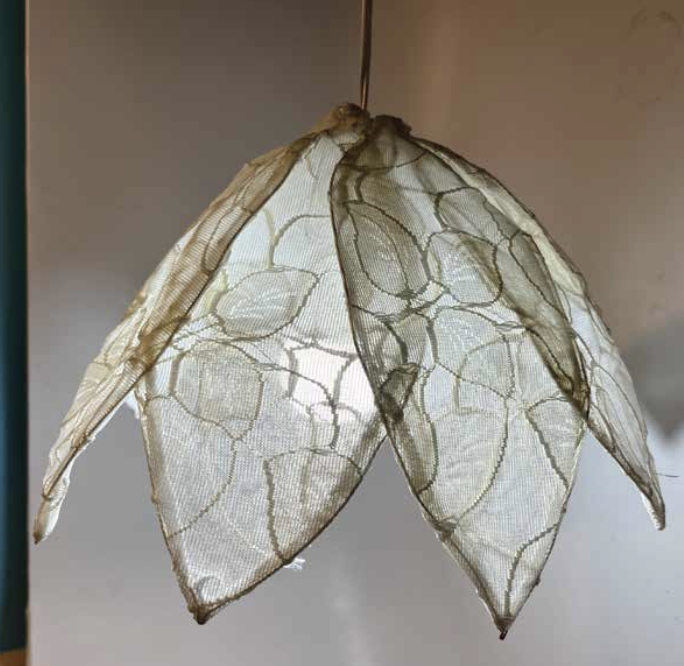
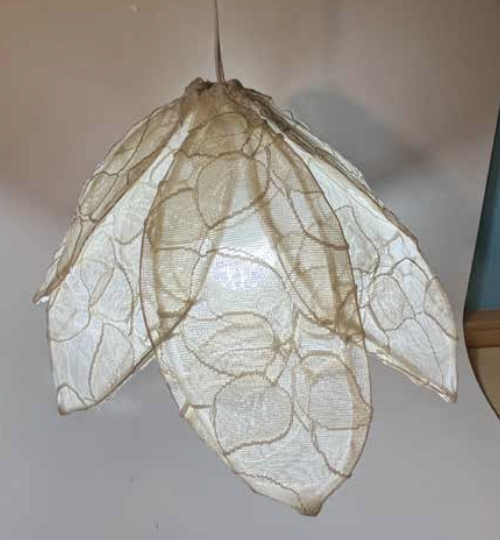
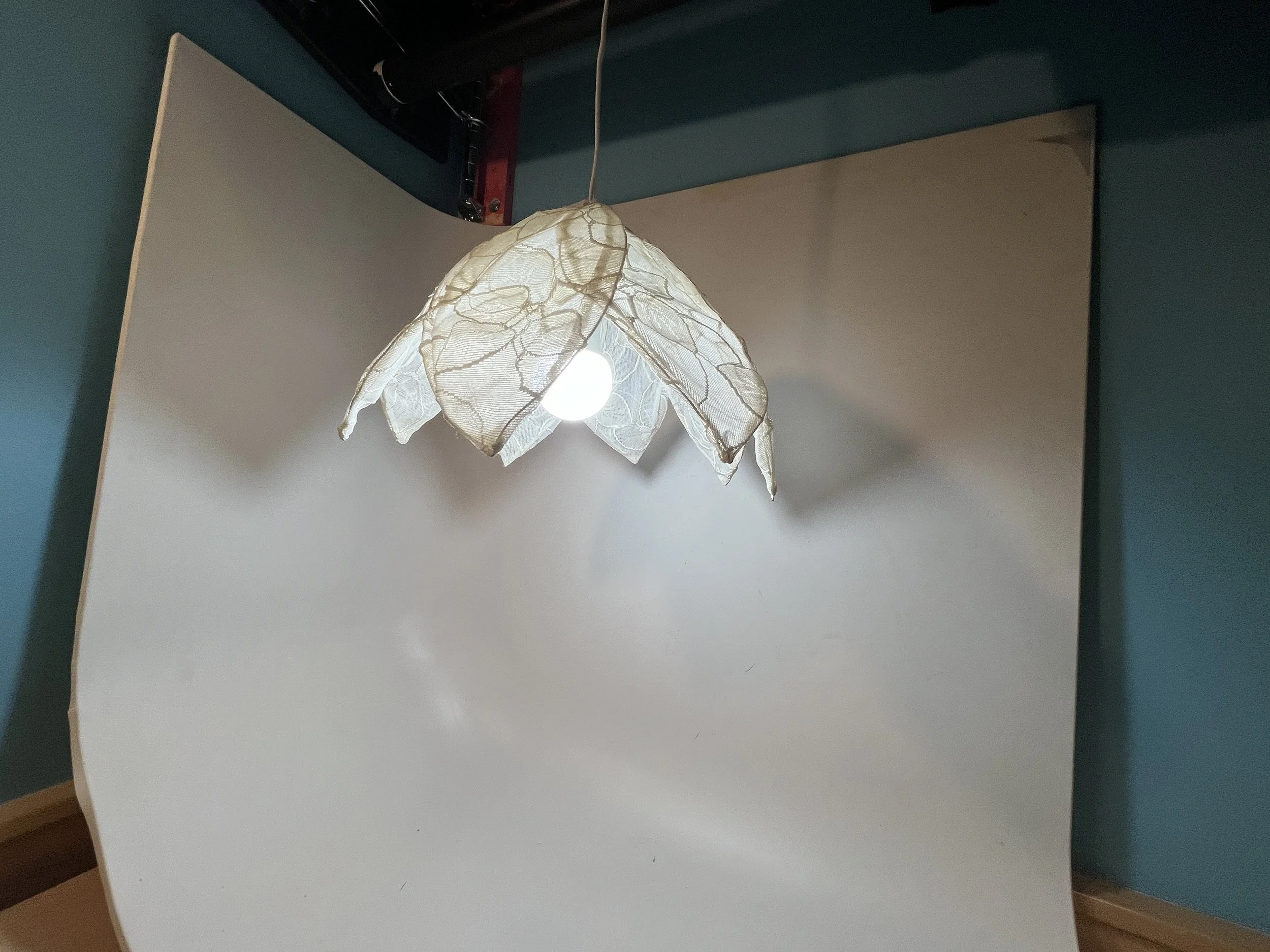
The Flower Hanging Lamp is a suspended light fixture inspired by organic floral forms and engineered through digital modeling and additive fabrication techniques. The project explores how layered petals, curvature, and light transmission can be translated into a functional, sculptural lamp that casts soft, petal-shaped shadows when illuminated.
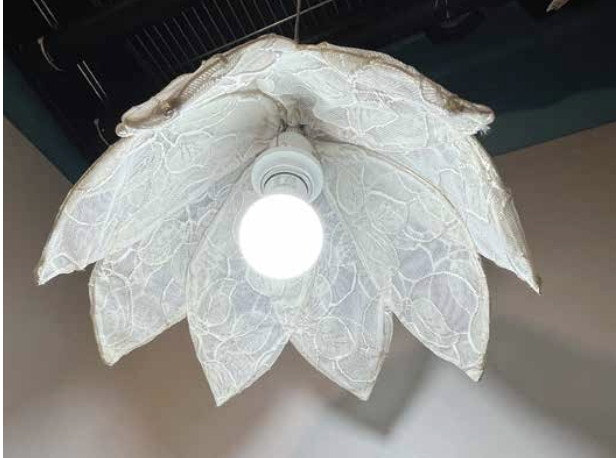
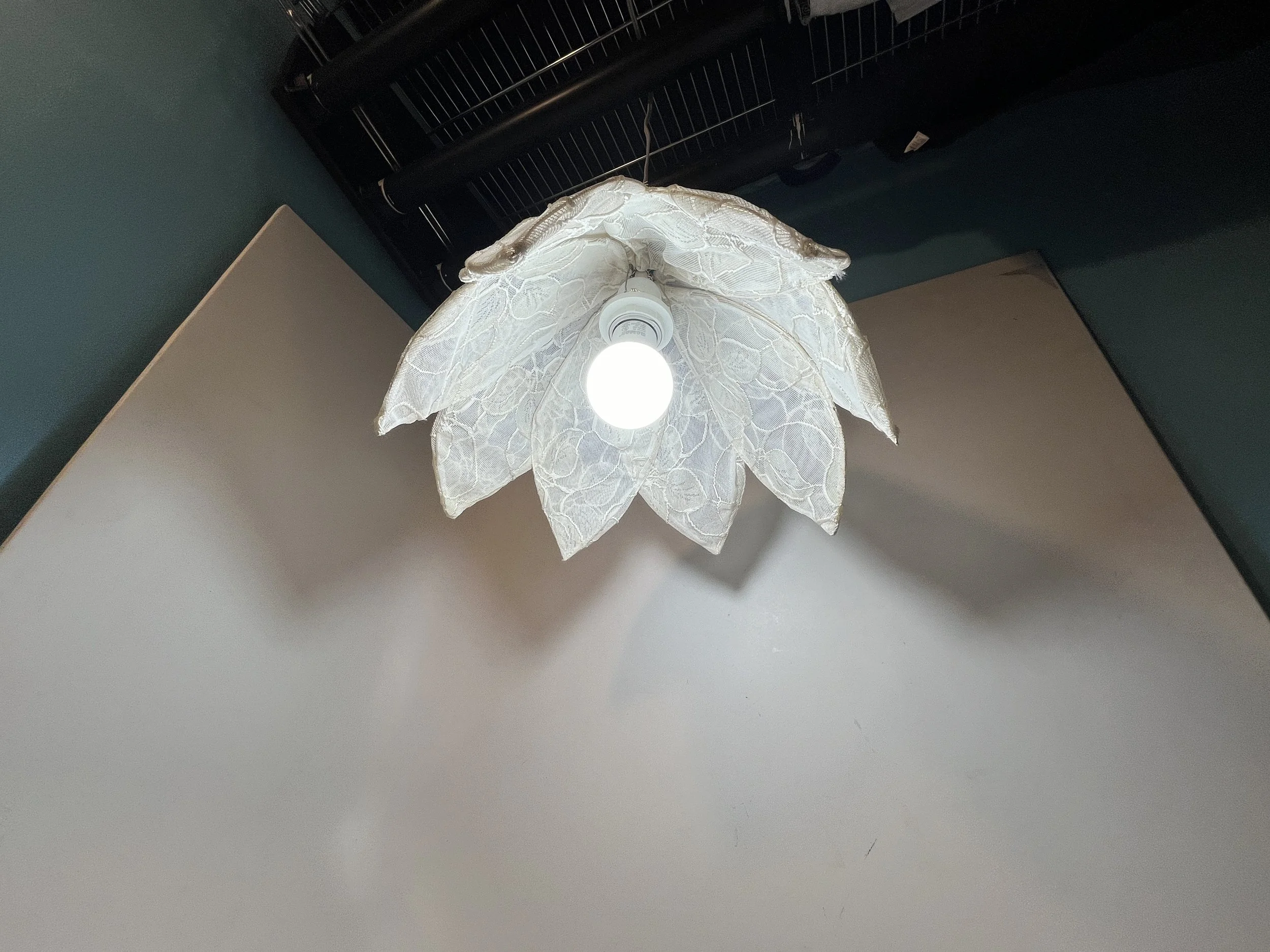
The final lamp consists of multiple interlocking petal components arranged into a blooming form, with an internal LED light source that creates an atmospheric downward glow. The result is a lightweight yet structured hanging lamp that blends nature-inspired biomorphism with engineered modular design.
Process
1. Inspiration & Sketching
I studied real flowers — lilies, tulips, magnolias — noting:
How petals overlap
How light passes through thin petal layers
How the center opens into a downward funnel
I sketched several blooming structures, exploring:
3-layer, 5-layer, and spiral petal arrangements
Petal curvature variation
How the petals should flare outward to catch light
How the lamp should balance when hanging
These sketches guided the CAD modeling process.
3. Prototyping — “Finding the right thickness is everything.”
I printed multiple small petal prototypes to test:
Light diffusion
Curvature fidelity
Structural rigidity
Printability without supports
Key discoveries:
Thin petals (1mm) → translucent, beautiful glow, but too fragile
Thick petals (3mm) → strong but too opaque
Final petal thickness settled around 1.6–2mm
Strong enough to handle
Thin enough to diffuse warm light
Printed cleanly with minimal supports
I also tested the petal base connection to ensure:
Easy press-fit assembly
No cracking during installation
Good alignment around the lamp’s circumference
Outcome
2. CAD Modeling — “Petals are harder than they look.”
Modeling a petal required achieving a balance between: prganic curvature, manufacturable geometry, structural stability
Petal Modeling Steps:
Began with a lofted base profile
Adjusted curvature along the spine to mimic natural petal bends
Thickened the surface to create a printable shell
Added a small connection tab at the base (key to assembly)
Lamp Structure:
The lamp is composed of: inner ring (holds the bulb adapter + suspension cord), middle ring (structural support), outer petal layer (the visible flower form)
Each petal attaches via interlocking joints that curve outward. The system had to be strong enough to hold the weight of the lamp yet flexible enough to allow slight bending during assembly.
4. Fabrication — Final Printing + Assembly
Printing
Petals printed individually in PLA
Slightly slower print speed to preserve curvature detail
Inner and middle rings printed at higher infill for stability
All pieces sanded along layer lines for smoother light diffusion
Assembly
The process included:
Attaching petals to the middle ring using the built-in tabs
Staggering petals to create layered bloom effect
Installing LED pendant light hardware through the inner ring
Threading the cord cleanly through the center
Hanging the fully assembled lamp and testing light spread
When illuminated, the petals softened the LED output into a gentle, floral glow.
The completed Flower Hanging Lamp is:
Lightweight
Delicately glowing
Structurally balanced
Easy to assemble
Visually organic
A functional sculptural object
Light gently filters through the petal layers, creating dynamic shadows and a warm ambience.
It reads as a blooming flower from below — a perfect identity match for a hanging pendant fixture.
What I learned
How to build modular organic forms in CAD
How thickness affects translucency in 3D prints
Designing for suspension + safety
Balancing aesthetics and function in light fixtures
How layering influences shadow and light spread
Importance of tolerances for repeated interlocking parts
Reflection
This project strengthened my ability to bridge art and engineering.
Creating a functional hanging lamp required both precision and creativity — from modeling petals that feel alive to ensuring wiring is safe, centered, and hidden.
It pushed me to think not only about form, but about how light interacts with form.
Personal insight
I found myself drawn to objects that bring a bit of nature into indoor spaces.
The Flower Hanging Lamp felt like designing a piece of digital nature — one that glows.
It reaffirmed my love for organic, biomorphic design and made me excited to create more light-based sculptural work in the future.